 Driftwood Defense
DuPont · WA
Flea Control in DuPont, WA
Flea Control Tailored to DuPont Living
Flea populations in DuPont behave differently than in drier inland cities. Our mild, damp climate creates a nearly year-round breeding window, especially in neighborhoods tucked against the Sequalitchew Creek corridor where humidity stays high. Without aggressive intervention, DuPont homeowners often face a frustrating boom-and-bust cycle: adult fleas die off during a short cold snap, but pre-emergent pupae stay dormant in warm crawlspaces and sunny flower beds, hatching the moment temperatures rise.
We tailor our flea protocols around DuPont’s specific rhythms. Whether you’re near the historic village or in the newer Northwest Landing developments, we map the hot spots: shady fence lines where pets rest, gravel pathways that trap organic debris, and the lawn layers where thatch shields larvae. By coupling these zone treatments with precise interior application, we account for the moisture levels unique to our slice of Pierce County, ensuring you aren't chasing the same infestation in thirty days.
DuPont’s mix of dense woods, historic homes, and modern subdivisions creates the perfect storm for persistent flea infestations. When your pets roam the trails near Fort Nisqually or roll in the damp grass of Clocktower Park, they inevitably pick up hitchhikers that reproduce rapidly inside your temperature-controlled home.
We interrupt that lifecycle where it thrives. Our DuPont-specific flea management program doesn’t just fog a single room—we treat the hidden hotspots where eggs collect, from baseboards to the sandy soil along Hoffman Hill, giving you a reset on comfort without forcing you to leave your home for days on end.
One call is all it takes to start.
Why Flea Control Matters in DuPont
Stop the Bite Cycle
A single flea can bite your pet over 400 times a day, leading to severe allergic dermatitis and tapeworm transmission.
Protect Your Home’s Interior
For every flea you see, about 95 percent exist as eggs, larvae, and pupae hiding deep in DuPont’s plush carpet fibers and baseboards.
Guard Against Local Wildlife
DuPont’s abundant greenbelts mean raccoons, deer, and stray cats often drop flea eggs in your yard, restarting infestations.
Break the Reproductive Chain
Modern treatments use insect growth regulators (IGRs) specifically designed to render flea eggs sterile without harming your family.
Preserve Your Well-Being
Fleas don’t just bite pets; they attack humans too, leaving itchy welts on ankles and calves while you relax in your Puget Sound living room.
Our DuPont Flea Elimination Process
- Precision Inspection We identify infestations by examining pet bedding zones, baseboards, and DuPont’s typical thatchy lawn areas where eggs and flea dirt accumulate.
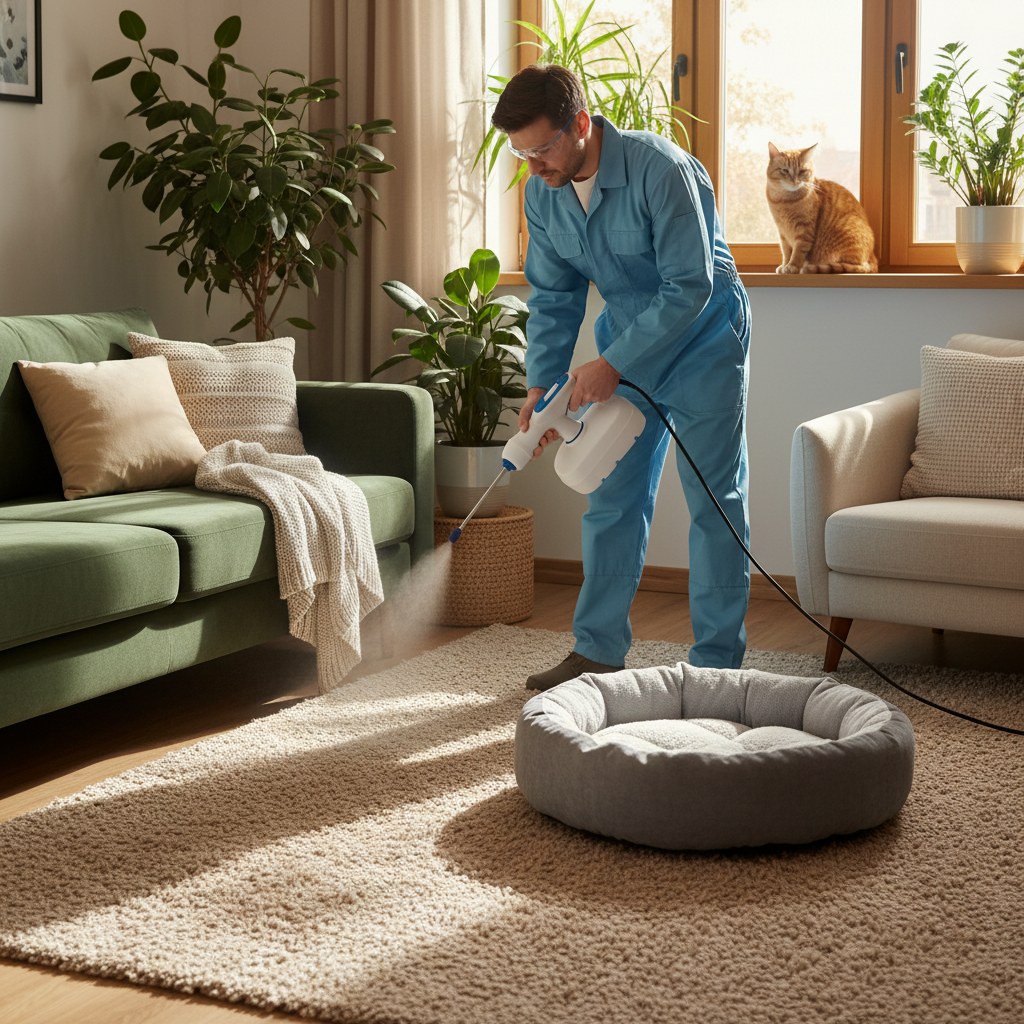
- Immediate Knockdown Treatment A professional-grade application begins indoors on all textile surfaces and floors, while exterior yard hot spots are treated simultaneously to neutralize hatching larvae.
- Birth Control Barrier Sterile insect growth regulators coat targeted zones, ensuring that any remaining eggs or pupae fail to develop into biting adults for the next several weeks.
- Stimulated Emergence Protocol We vacuum aggressively post-treatment to stimulate stubborn pupae into emerging against the residual barrier, drastically speeding up total eradication within 72 hours.
- Cycle-Interrupt Follow-Up We schedule a targeted re-evaluation timed to the life cycle of fleas active in Pierce County, catching any late-hatching stragglers before they can breed again.