 Driftwood Defense
Fort Lewis · WA
Spider Control in Fort Lewis, WA
Spider Control Tailored to Fort Lewis & JBLM
Fort Lewis sits in the middle of Washington's spider-heavy South Puget Sound region, where temperate rainforest conditions push arachnids indoors from September through late November. Base housing units, especially those backing up to the expansive Training Area 5 woodlands and the Nisqually Basin, face relentless pressure from house spiders weaving in high corners, and aggressive hobo spiders moving into ground-level utility rooms. The constant damp around American Lake creates ideal breeding microclimates that require more than a generic bug spray—homes here need perimeter defense calibrated to Pierce County's exact species mix.
We've serviced homes from Evergreen to Beachwood, and we know that spider problems on post aren't just cosmetic. The Pacific Northwest is home to the highest concentration of hobo spiders in the country, and their necrotic bites are a documented risk in crawl spaces and garages common to historic Fort Lewis architecture. Our technicians understand the unique challenge of treating spider harborages without violating JBLM's strict chemical runoff guidelines that protect the Nisqually watershed. Whether you're in a mid-century duplex on Liggett Avenue or new construction near Madigan Army Medical Center, we eliminate current infestations and establish a year-round defensive zone that keeps webs from reforming after the next rain.
If you are stationed at Fort Lewis, you know the battle against spiders never really ends once the fall rain sets in. Between the dense Douglas fir stands and the humidity rolling off American Lake, homes on post are a magnet for everything from harmless cellar spiders to venomous black widows and aggressive hobo spiders. You need a pest control partner who understands the unique pressures of life on a military installation—and who delivers fast, discreet, regulation-compliant treatments that let you focus on the mission, not what is crawling in the corner.
Our spider control service was built specifically for the base housing community. We treat interior perimeters, basements, and garages while systematically stripping exterior webs and egg sacs from eaves and siding—because on Fort Lewis, a single undisturbed egg sac can release hundreds of spiderlings into your home within weeks. This isn't a one-size-fits-all approach pulled from a Tacoma playbook; it is a defensive strategy tailored to the exact microclimates and construction types found across JBLM.
One call is all it takes to start.
Why Fort Lewis Homeowners Trust Our Spider Control
Military Family Discounts
Active duty and retired personnel at JBLM receive priority scheduling and exclusive savings.
Species-Specific Treatments
We target aggressive hobo spiders and reclusive black widows common to Pierce County base housing.
Pet & Child Safe
Our low-toxicity microencapsulated formulas protect your family without leaving dangerous residue.
Garrison-Code Compliance
All treatments meet or exceed JBLM environmental standards for pest management on federal property.
Web Removal & Prevention
We physically sweep eaves, windows, and foundation lines, then apply a protective silica barrier.
How We Reclaim Your Home from Spiders
- Base-Specific Inspection We inspect eaves, crawl spaces, and foundation cracks around your Fort Lewis home to locate webs, egg sacs, and entry points specific to your housing type.
- Interior Crack & Crevice Treatment Using backpack foggers and crack-and-crevice tools, we apply low-toxicity microencapsulated product along baseboards, utility penetrations, and sill plates where hobo spiders travel.
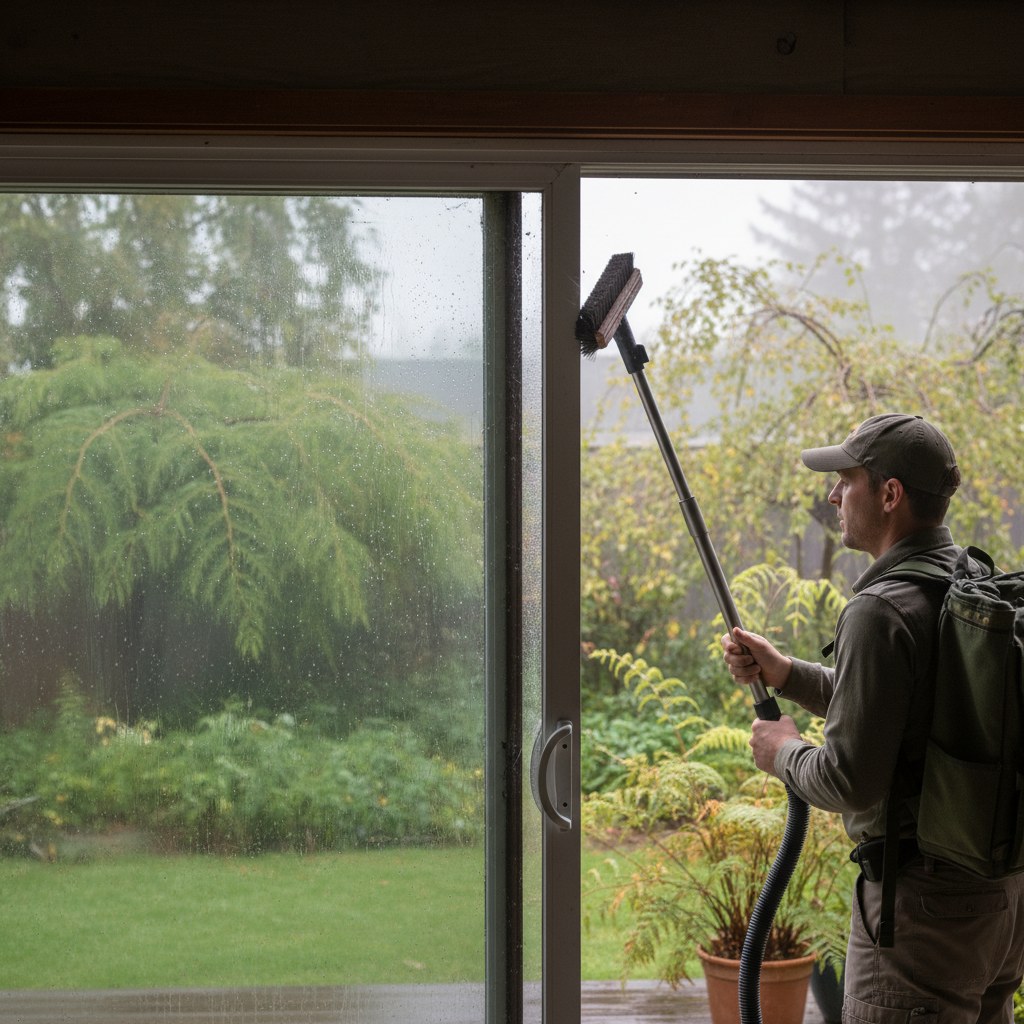
- Exterior Web Sweep & Dust We physically remove webs, egg sacs, and spider bodies from eaves, windows, and garage door frames using extension poles, then apply a long-lasting silica repellent dust beneath siding lips.
- Defensive Perimeter Zone We establish a 12-inch granular and liquid perimeter around your foundation, stopping spiders before they breach the structure—reapplied on a custom schedule based on Fort Lewis rainfall patterns.